Spectrum-X vs. InfiniBand Quantum-X
Part 1: The Great Interconnect Battle for Trillion-Parameter AI Superclusters
In the rapidly evolving landscape of artificial intelligence supercomputers, the choice between Lossless Ethernet (Spectrum-X) and native InfiniBand (Quantum-X) stands out as a vital architectural decision. As model parameters cross the trillion-parameter mark, network bisection bandwidth directly governs GPU cluster efficiency.
1. The Core Impasse of Distributed AI Training
In large-scale AI training across tens of thousands of GPUs, computational workloads are distributed across many server nodes. At every training step, GPUs must synchronize model weights and gradient updates through collective network operations.
💡 Simple Rule of Thumb: Step Duration
Total Training Time = GPU Compute Time + Network Sync Time
In plain terms: No matter how fast your GPUs calculate math, if the network takes 25ms to sync gradients, all GPUs idle while waiting.
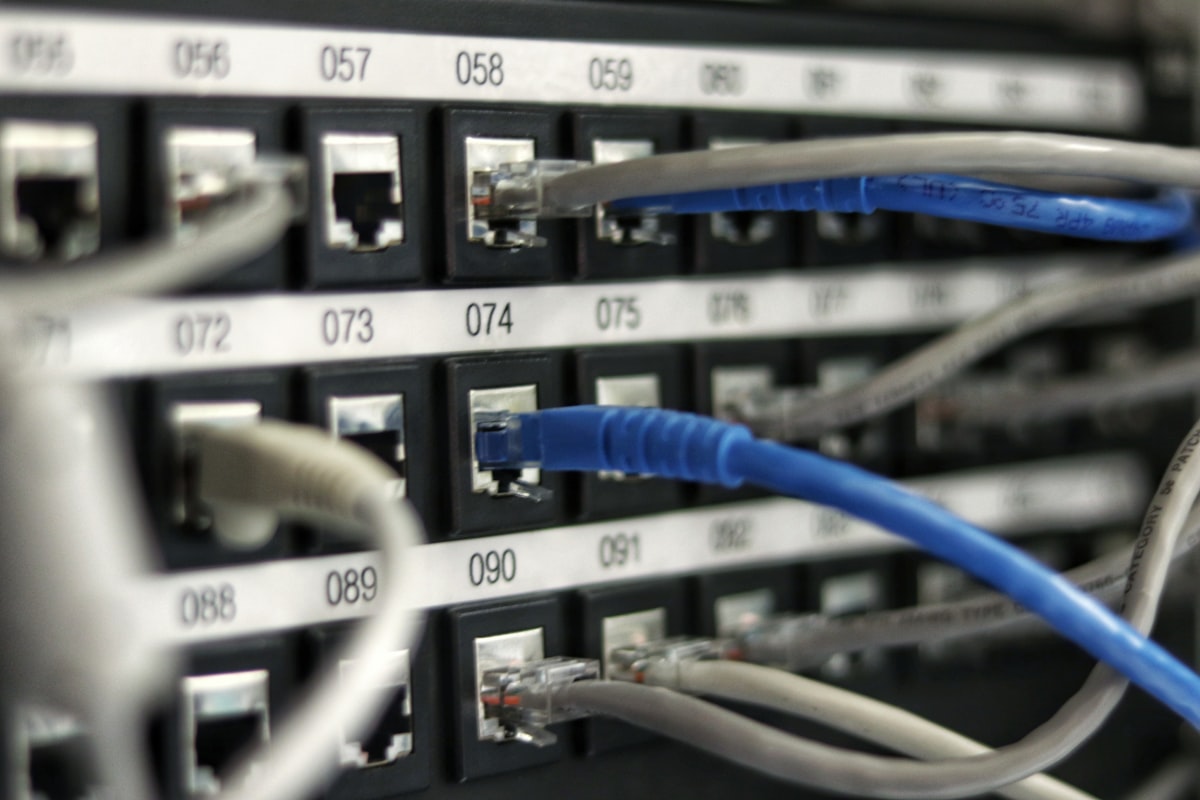
Real-world high-density fiber optic interconnect switches driving 800Gbps bisection bandwidth. Credit: Unsplash Infrastructure Library.
2. Incast Congestion & The Straggler Effect
In standard enterprise network switches, traffic is routed using static flow hashes. When multiple GPU nodes transmit heavy gradient bursts simultaneously to a single destination switch port, an incast congestion storm occurs.
Switch packet buffers overflow, causing packet drops. Standard TCP or unoptimized RoCE forces packet retransmissions, introducing tail latency delays. Because gradient synchronization requires all GPUs to finish, a single delayed packet on 1 GPU forces all 100,000 GPUs to wait—a phenomenon known as the Straggler Effect.
💬 Key Executive Takeaway
"In a 100,000-GPU cluster, a single packet drop on a static hash route drops cluster-wide Model Flops Utilization (MFU) by up to 30%. Dynamic packet spraying is mandatory for trillion-parameter scale."
Spectrum-X vs. InfiniBand Quantum-X
Part 2: Deconstructing NVIDIA Spectrum-X Lossless Ethernet
NVIDIA Spectrum-X was engineered specifically to solve Ethernet's legacy flaws—incast congestion, static hash collision, and out-of-order packet drops—bringing Ethernet to performance parity with InfiniBand for enterprise multi-tenant AI fabrics.
1. Spectrum-4 Switch Silicon Teardown
At the core of Spectrum-X is the NVIDIA Spectrum-4 Switch ASIC. Built on a monolithic 51.2 Tbps switching silicon architecture, Spectrum-4 delivers 64 ports of native 800Gbps OSFP or 128 ports of 400Gbps QSFP-DD.
Unlike commodity Ethernet switches with fragmented buffer architectures, Spectrum-4 features a fully shared packet buffer pool that dynamically allocates memory to active micro-burst flows, preventing tail-drop buffer starvation.
2. NVIDIA RoCE Adaptive Routing (AR)
Rather than relying on static flow hashes, Spectrum-4 switches continuously monitor egress queue depth every few nanoseconds. The switch dynamically sprays individual packets across all available parallel links in the fabric.
Even if multiple GPUs target the same destination, packet spraying distributes the load evenly across every physical cable, eliminating link hot-spots.
⚡ Wire-Speed Out-of-Order Reordering
Packet spraying causes packets to arrive out of sequence. NVIDIA ConnectX-7 / ConnectX-8 SuperNICs contain dedicated hardware engines that reorder packets on-the-fly directly into GPU VRAM via GPUDirect RDMA with zero CPU overhead.
3. Congestion Control: ECN, PFC & Fast React
Spectrum-X combines three congestion management protocols:
Spectrum-X vs. InfiniBand Quantum-X
Part 3: Deconstructing NVIDIA InfiniBand Architecture & SHARP v3
While Spectrum-X brings Ethernet to parity, native InfiniBand remains the gold standard for dedicated, single-tenant AI supercomputers requiring absolute minimum bisection latency and hardware-level compute offloading.
1. Physical Layer Credit-Based Flow Control
InfiniBand is a natively lossless architecture. Communication is governed by a physical-layer credit-based flow control mechanism: a transmitting port cannot send a packet unless the receiving port buffer explicitly issues a credit token.
Because credits correspond directly to available receiver buffer space, packet drops due to buffer overflow are physically impossible in an InfiniBand fabric.
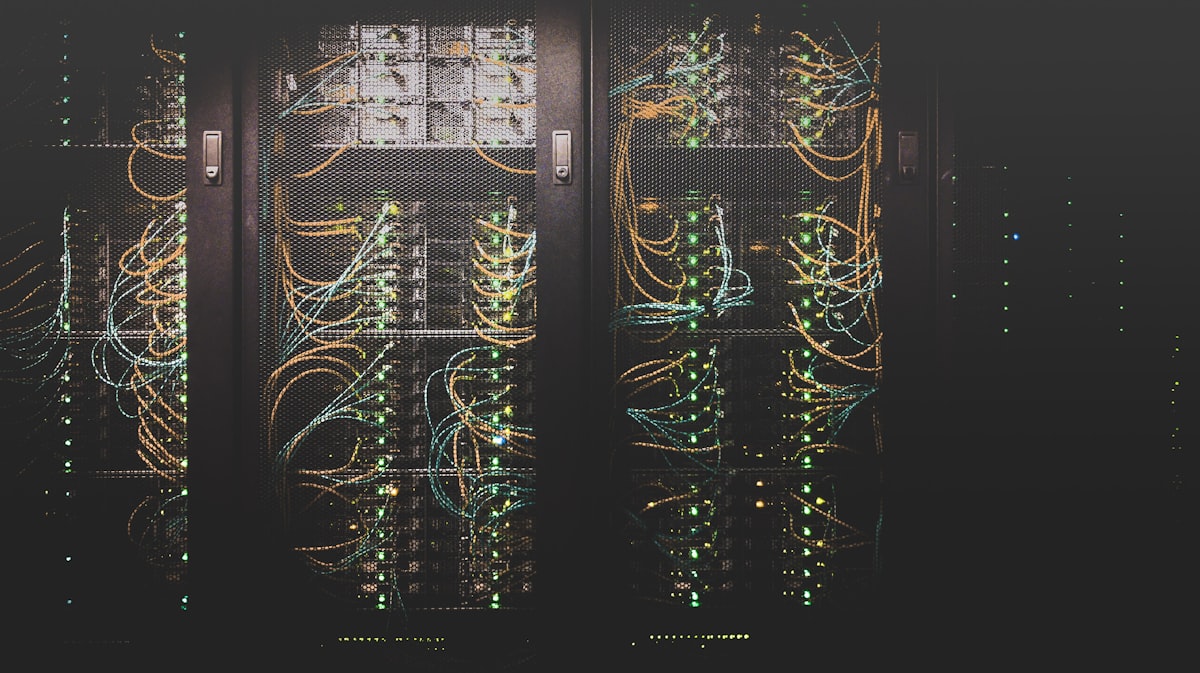
Real-world AI SuperPOD cluster featuring liquid-cooled Quantum InfiniBand switches. Credit: Unsplash Datacenter Library.
2. Quantum-X800 & XDR 800Gbps Evolution
The latest NVIDIA Quantum-X800 switch delivers 115.2 Tbps of non-blocking switching capacity with 144 ports of 800Gbps XDR.
3. NVIDIA SHARP v3 In-Network Compute
The primary differentiator of InfiniBand is NVIDIA SHARP (Scalable Hierarchical Aggregation and Reduction Protocol). SHARP offloads mathematical gradient reduction operations directly onto switch silicon.
💡 Plain-English Takeaway: SHARP Reduction
In plain terms: SHARP calculates gradient math inside switch chips while data is in transit, cutting total network traffic in half and freeing GPUs to focus purely on compute.
Spectrum-X vs. InfiniBand Quantum-X
Part 4: Architectural Decision Matrix & Performance Benchmarks
To guide enterprise infrastructure selection, we present the comprehensive architectural comparison matrix, MLPerf throughput benchmarks, and deployment guidance.
Comprehensive Architectural Comparison Matrix
| Architectural Feature | NVIDIA Spectrum-X (Ethernet) | NVIDIA InfiniBand (Quantum-X) |
|---|---|---|
| Underlying Protocol | Enhanced RoCEv2 (RDMA over Ethernet) | Native InfiniBand Architecture (IBA) |
| Switch ASIC Capacity | Spectrum-4 (51.2 Tbps) | Quantum-X800 (115.2 Tbps) |
| Max Port Speed | 800Gbps OSFP / 400Gbps QSFP-DD | 800Gbps XDR / 400Gbps NDR |
| Routing Engine | Fine-Grained Adaptive Packet Spraying | Dynamic Adaptive Routing (LID based) |
| Congestion Mechanism | Enhanced ECN + PFC + Fast React | Credit-Based Lossless (Zero Drop) |
| In-Network Compute | Direct Data Placement (DDP) | Hardware SHARP v3 Reduction Offload |
| Fabric Automation | Standard BGP / EVPN / Cumulus Linux | Centralized Subnet Manager (SM) |
| Multi-Tenancy Support | Standard VLAN, VXLAN, Tenant IP | InfiniBand P_Key Partition Isolation |
Real-World Throughput Benchmarks
In 16,384-GPU cluster benchmarks running Llama 3.1 405B pre-training:
🎯 Final Architectural Decision Guide
Deploy Spectrum-X Ethernet if: You are an Enterprise or Cloud Service Provider building a multi-tenant AI cloud, integrating into existing Ethernet datacenter backbones, or requiring standard BGP routing.
Deploy InfiniBand Quantum-X if: You are building a dedicated single-tenant AI SuperPOD focused exclusively on maximum MFU for trillion-parameter LLM pre-training.