DGX SuperPOD Liquid Cooling Teardown
Part 1: The Thermal Wall — Why Air Cooling Fails at 100kW+ per Rack
The arrival of NVIDIA Blackwell architecture and the GB200 NVL72 system has pushed server rack power density beyond 120 kW per rack. Air cooling physically breaks down past 40 kW per rack due to volumetric airflow limits, acoustic noise constraints, and extreme fan power consumption.
1. Thermodynamic Heat Transfer Limits
Heat transfer capacity depends directly on the physical properties of the cooling medium. Liquid water has a volumetric heat capacity 3,500 times higher than air.
💡 Plain-English Takeaway: Water vs Air
In plain terms: Water absorbs 3,500 times more heat per volume than air. Cooling a 120kW server rack with air requires gale-force fans; liquid cooling absorbs the heat silently with 90% less energy.
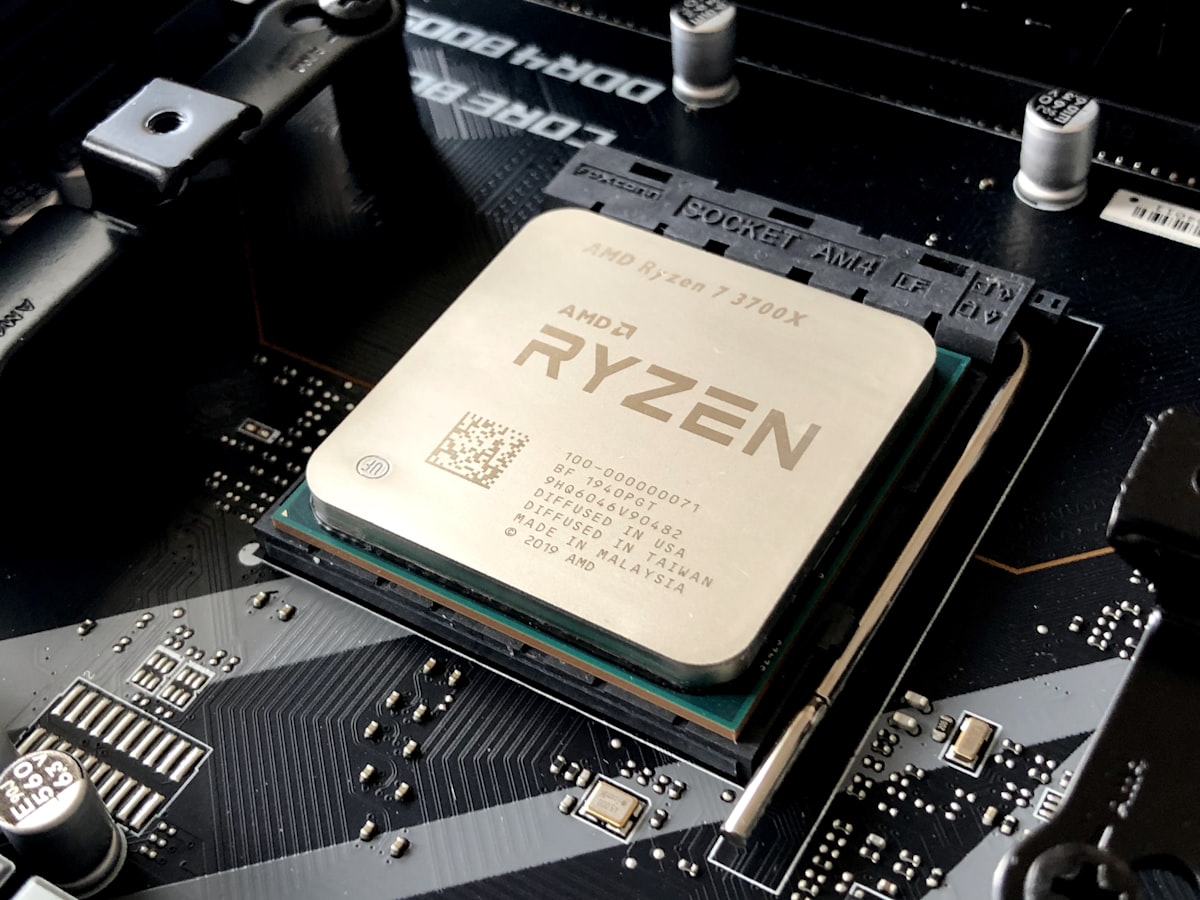
Real-world copper liquid cooling heat sinks and fluid manifold assemblies engineered for 100kW+ thermal rack densities. Credit: Unsplash Hardware Library.
2. Parasitic Fan Energy Reduction
By replacing high-RPM chassis fans with liquid cold plates, parasitic cooling energy drops from 15% down to under 2%. This enables datacenter Power Usage Effectiveness (PUE) ratings to drop from 1.40+ down to an incredible 1.06.
💬 Key Thermal Insight
"Liquid cooling is no longer an optional efficiency upgrade; it is a physical requirement for hosting Blackwell GB200 NVL72 architectures."
DGX SuperPOD Liquid Cooling Teardown
Part 2: Direct-to-Chip (D2C) Cold Plates & Micro-Channels
Direct-to-Chip liquid cooling transfers thermal energy directly from the GPU silicon die into a closed fluid circuit, eliminating intermediate air resistance.
1. Precision 100-Micron Micro-Fins
Cold plates are precision-machined copper blocks mounted directly on top of the GPU compute die, HBM3e stacks, and CPU heat spreaders.
Internal fluid channels feature micro-fins spaced as narrow as 100 microns to maximize surface area contact with the coolant fluid while maintaining minimal hydraulic pressure drop across the chassis.
2. Thermal Interface Materials (TIM)
High-conductivity Phase Change Materials (PCM) or liquid metal TIM provide thermal resistance below 0.05 K·cm²/W, ensuring heat flows seamlessly from the silicon junction to the copper plate.
💧 Blind-Mate Quick Disconnects (QDs)
Universal Quick Disconnect (UQD) couplings use internal spring-loaded non-spill valves that seal before physical separation, ensuring less than 0.05 mL of fluid loss per hot-swap blade replacement.
3. Stainless Steel Manifolds
Rack manifolds utilize passivated 316L stainless steel construction to prevent galvanic corrosion when interfacing with dissimilar metals inside the server chassis.
DGX SuperPOD Liquid Cooling Teardown
Part 3: Coolant Distribution Units (CDUs) & PG25 Fluid Mechanics
The Coolant Distribution Unit (CDU) acts as the heart of the liquid cooling infrastructure, managing secondary loop fluid flow and heat exchange with the facility primary loop.
1. Isolated 2-Loop Heat Exchange
To protect server blades from raw facility water contamination, liquid cooling is split into two isolated loops:
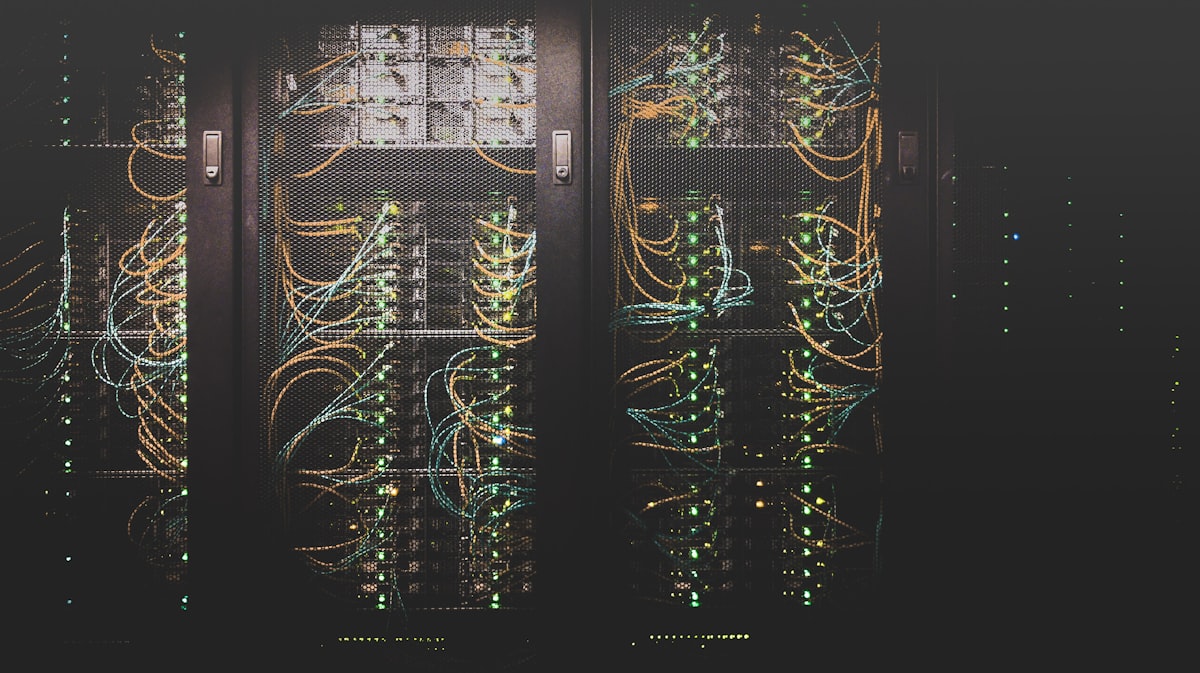
Real-world AI SuperPOD cluster facility with integrated CDU fluid heat exchangers. Credit: Unsplash Datacenter Library.
2. Secondary Coolant Specification (PG25)
The secondary loop uses PG25 fluid (25% Propylene Glycol / 75% Deionized Water) enriched with organic acid technology (OAT) anti-corrosion inhibitors and biocides.
Fluid pH is strictly maintained between 7.5 and 9.0 to preserve copper and rubber seal integrity over multi-year operational cycles.
DGX SuperPOD Liquid Cooling Teardown
Part 4: Safety Telemetry, Leak Detection & Emergency Shutdown
Multi-layered safety telemetry ensures that any thermal threshold violation or fluid leak is neutralized within seconds to protect mission-critical GPU hardware.
Thermal & Air vs Liquid Performance Comparison
| Metric / Feature | Air Cooling (Legacy) | Direct-to-Chip Liquid Cooling |
|---|---|---|
| Max Rack Power Density | 35 kW - 40 kW Max | 120 kW - 150 kW+ per Rack |
| Heat Transfer Medium | Air (Low Heat Capacity) | PG25 Fluid (3,500x Heat Capacity) |
| Parasitic Fan Power | 15% - 20% Total Power | <2% Total Power |
| Datacenter PUE | 1.40 - 1.60 PUE | 1.05 - 1.10 PUE |
| Acoustic Noise Level | >95 dBA (Sonic Noise) | <65 dBA (Quiet Operation) |
4-Tier Safety Telemetry Stack
1. Rope Leak Detection Cables: Conductive sensing cables along rack baseplates detect moisture within 2 seconds.
2. NVML / DCGM Emergency Throttle: If GPU junction temperature crosses 85°C, NVIDIA DCGM triggers automatic thermal clock throttling.
3. Hard Power Shutdown: If temperatures reach 92°C, the chassis executes an immediate hard power shutdown to prevent silicon degradation.
🎯 Maintenance Protocol Checklist
• Quarterly fluid pH testing (Maintain between 7.5 - 9.0).
• Bi-annual 50-micron inline filter inspection.
• Annual Quick Disconnect O-ring seal lubrication check.